

Workplace Wellness Global Market Opportunities And Strategies To 2035
By Type (Physical Wellness, Mental Or Emotional Wellness, Financial Wellness, Social Wellness, Spiritual Wellness), By Service Delivery (On-Site, Off-Site, Virtual), By Organization Type (Government Organizations, Private Organizations), By End-User (Small-Size Private Organizations, Mid-Size Private Organizations, Large-Size Private Organizations, Public Sector, Non-Governmental Organization (NGO)), And By Region, Opportunities And Strategies – Global Forecast To 2035
Workplace Wellness Market Definition
Workplace wellness refers to programs, services and initiatives implemented by employers to support and improve the health and well‑being of employees. It encompasses a broad range of activities designed to enhance physical, mental, emotional, financial, social and spiritual health in the work environment. The workplace wellness market consists of sales, by entities (organizations, sole traders, or partnerships) that is used by organizations of all sizes and sectors to help employees maintain or improve their overall wellness, reduce health‑related costs, boost productivity, increase engagement and improve retention.
Workplace Wellness Market Size
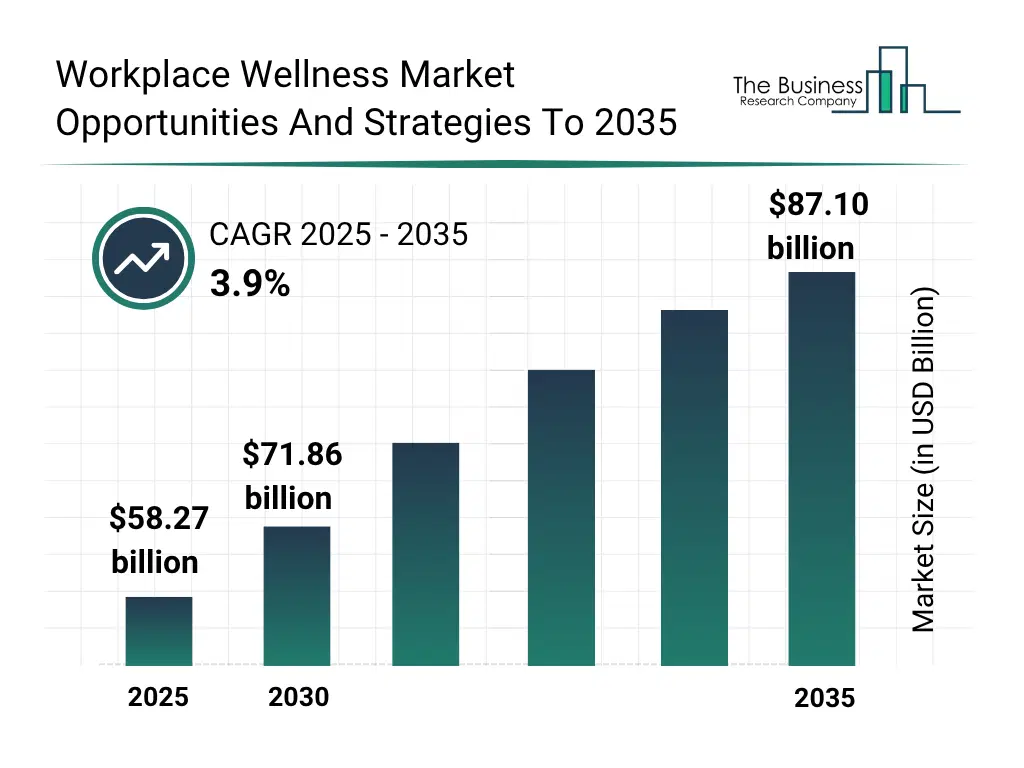
The global workplace wellness market reached a value of nearly $58,269.2 million in 2025, having grown at a compound annual growth rate (CAGR) of 4.4% since 2020. The market is expected to grow from $58,269.2 million in 2025 to $71,864.6 million in 2030 at a rate of 4.3%. The market is then expected to grow at a CAGR of 3.9% from 2030 and reach $87,101.7 million in 2035. Growth in the historic period resulted from rising focus on employee health and well-being, rising cases of sleep health and fatigue management, global expansion of multinational corporations and government initiatives and regulatory support. Factors that negatively affected growth in the historic period were high implementation and program costs and low employee engagement and participation. Going forward, increasing prevalence of mental health issues due to workload, growing demand for financial wellness programs within workplace, expansion of corporate health insurance coverage and growing focus on diversity, equity, inclusion, and belonging (DEIB) will drive the growth. Factors that could hinder the growth of the workplace wellness market in the future include employee skepticism and trust deficit, uncertain return on investment (ROI) measurement and impact of trade war and tariffs.Workplace Wellness Market Segmentation
The workplace wellness market is segmented by type, by service delivery, by organization type and by end-user.By Type –
The workplace wellness market is segmented by type into:
- a) Physical Wellness
- b) Mental Or Emotional Wellness
- c) Financial Wellness
- d) Social Wellness And Spiritual Wellness
By Service Delivery –
The workplace wellness market is segmented by service delivery into:
- a) On-Site
- b) Off-Site
- c) Virtual
By Organization Type –
The workplace wellness market is segmented by organization type into:
- a) Government Organizations
- b) Private Organizations
By end user –
The workplace wellness market is segmented by end user into:
- a) Small-Size Private Organizations
- b) Mid-Size Private Organizations
- c) Large-Size Private Organizations
- d) Public Sector
- e) Non-Governmental Organization (NGO)
By Geography - The workplace wellness market is segmented by geography into:
- • China
- • India
- • Japan
- • Australia
- • Indonesia
- • South Korea
- • USA
- • Canada
- • Brazil
- • France
- • Germany
- • UK
- • Italy
- • Spain
- • Russia
-
o Asia Pacific
o Africa