

Sleep Global Market Opportunities And Strategies To 2035
By Product Type (Sleep Aids, Sleep Technologies), By Indication (Insomnia, Sleep Apnea, Narcolepsy, Restless Leg Syndrome, Rapid Eye Movement Sleep Behavior Disorder, Other Indications), By Distribution Channel (Online, Offline), And By Region, Opportunities And Strategies – Global Forecast To 2035
Sleep Market Definition
The sleep market encompasses the wide range of products, technologies, devices and related solutions designed to support, enhance, monitor, or treat the human biological process of sleep. Sleep is a vital physiological state experienced by all humans to restore physical and cognitive functioning. The Sleep market serves a broad user base that includes everyday consumers seeking improved rest and comfort, individuals with diagnosed or undiagnosed sleep disorders, healthcare professionals, caregivers, wellness practitioners and clinical sleep centers. The sleep market consists of sales by entities (organizations, sole traders and partnerships) of sleep products and technologies that is used continuously as part of daily life, primarily during nighttime sleep periods, but also for daytime rest or clinically supervised sleep monitoring when required.
Sleep Market Size
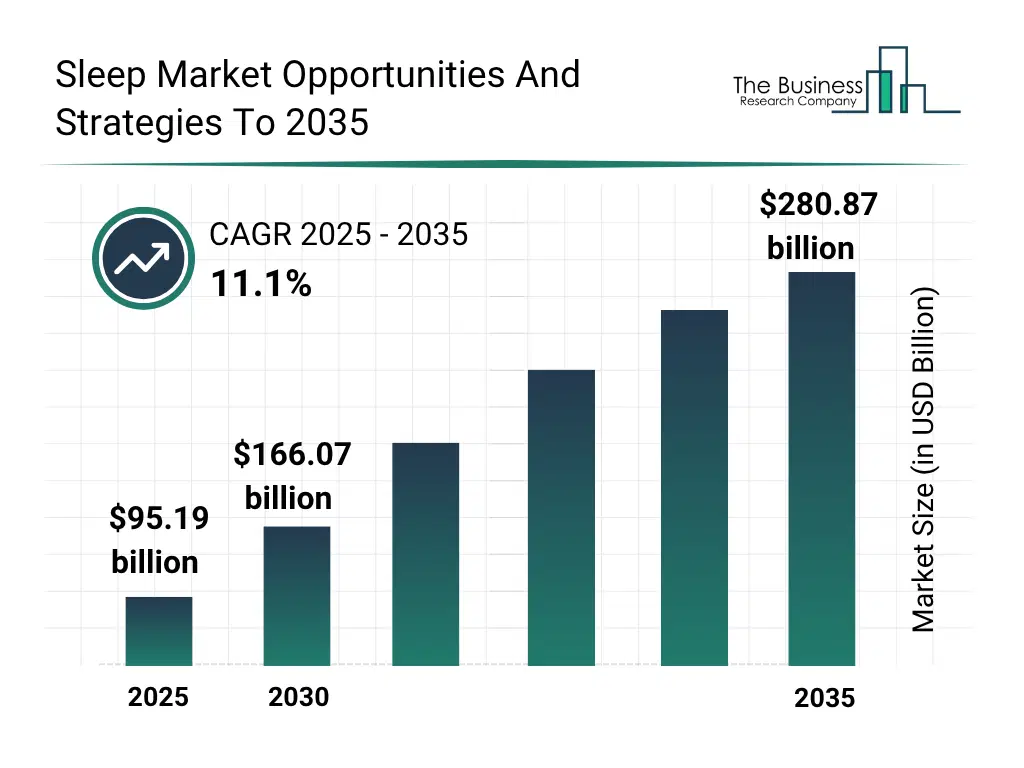
The global sleep market reached a value of nearly $95,190.0 million in 2025, having grown at a compound annual growth rate (CAGR) of 12.3% since 2020. The market is expected to grow from $95,190.0 million in 2025 to $166,073.7 million in 2030 at a rate of 11.8%. The market is then expected to grow at a CAGR of 11.1% from 2030 and reach $280,869.7 million in 2035. Growth in the historic period resulted from the rising prevalence of sleep disorders, growing public awareness of sleep health, rise in telemedicine and growing prevalence of stress, anxiety and mental-health conditions. Factors that negatively affected growth in the historic period were limited awareness and underdiagnosis of sleep disorders and side effects of sleep medications. Going forward, the expanding aging population, rising corporate wellness programs, shift towards natural and non-invasive therapies and growing online retail channels will drive the growth. Factor that could hinder the growth of the sleep market in the future include high cost of advanced sleep monitoring and therapy devices, reimbursement and insurance coverage constraints and impact of trade war and tariffs.Sleep Market Segmentation
The sleep market is segmented by type, by product type, by indication, and by distribution channel.By Type –
The sleep market is segmented by type into:
- a) Sleep Aids
- b) Sleep Technologies
By Indication –
The sleep market is segmented by indication into:
- a) Insomnia
- b) Sleep Apnea
- c) Narcolepsy
- d) Restless Leg Syndrome
- e) Rapid Eye Movement Sleep Behavior Disorder
- f) Other Indications
By Distribution Channel –
The sleep market is segmented by distribution channel into:
- a) Online
- b) Offline
By Geography - The sleep market is segmented by geography into:
- • China
- • India
- • Japan
- • Australia
- • Indonesia
- • South Korea
- • USA
- • Canada
- • Brazil
- • France
- • Germany
- • UK
- • Italy
- • Spain
- • Russia
-
o Asia Pacific
o Africa