
Respiratory Syncytial Virus Vaccine Global Market Opportunities And Strategies To 2035
By Type (Viral Vaccine, Bacterial Vaccine, Combination Vaccine), By Clinical Indications (Pediatric Indication, Geriatric Indication, High-Risk Individuals), By Distribution Channel (Hospital And Others Pharmacies, Government Suppliers), And By Region, Opportunities And Strategies – Global Forecast To 2035
Respiratory Syncytial Virus Vaccine Market Definition
A respiratory syncytial virus (RSV) vaccine is a biological preparation designed to stimulate the immune system to protect against RSV infection, a common respiratory virus that can cause severe illness, especially in infants, older adults, and individuals with weakened immune systems. These vaccines may use different technologies, including protein subunit, messenger ribonucleic acid (mRNA), or vector-based platforms, to trigger protective immunity. The primary purpose of an RSV vaccine is to prevent RSV-related respiratory infections, hospitalizations, and complications, particularly in high-risk populations. The respiratory syncytial virus vaccine market comprises revenues generated by entities involved in the development, production and distribution of vaccines designed to prevent respiratory syncytial virus (RSV) infections. RSV is a highly contagious virus that affects the respiratory tract and poses a significant health risk to infants, older adults and individuals with underlying health conditions. The vaccine is primarily used to reduce the incidence of RSV-associated lower respiratory tract disease, hospitalizations and related complications in vulnerable populations.
Respiratory Syncytial Virus Vaccine Market Size
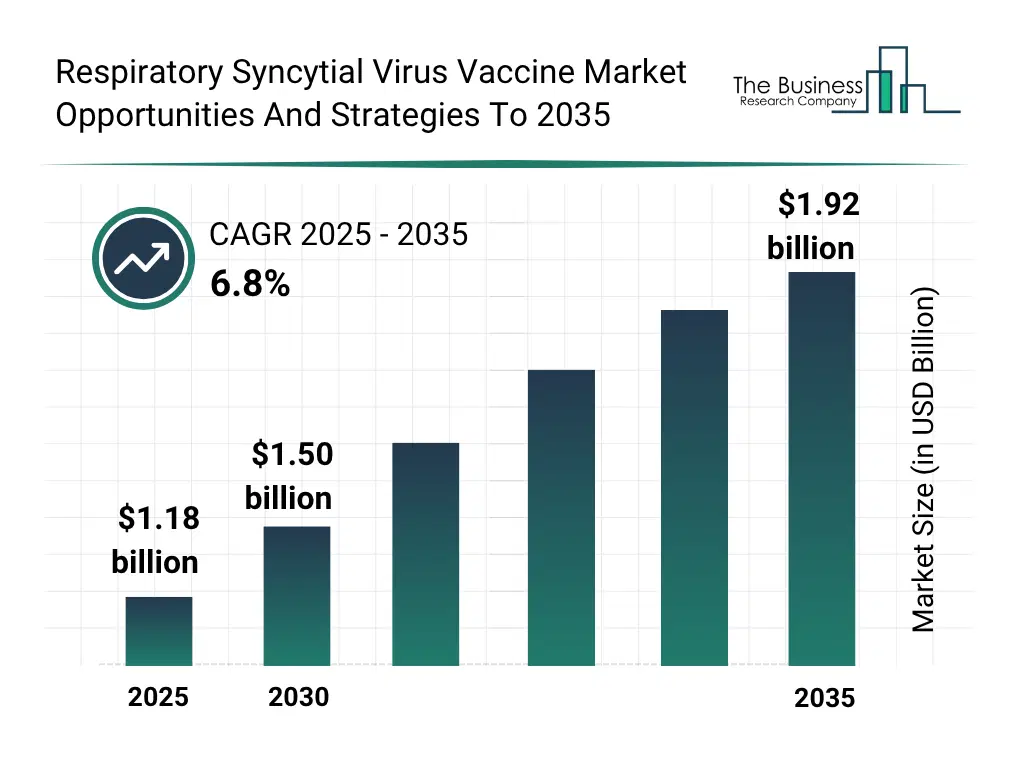
The global respiratory syncytial virus vaccine market reached a value of nearly $1,175.4 million in 2025. The market is expected to grow from $1,175.4 million in 2025 to $1,495.7 million in 2030 at a rate of 4.9%. The market is then expected to grow at a CAGR of 5.1% from 2030 and reach $1,916.9 million in 2035. Growth in the historic period resulted from growing rate of premature birth, growing demand for maternal immunization to protect newborns, expansion of pediatric and adult vaccination infrastructure and growing cases of lung conditions in old age. Factors that negatively affected growth in the historic period were vaccine hesitancy and high cost and lack of awareness. Going forward, strong government and NGO focus on RSV comorbidities, increasing adoption of immunization programs targeting RSV, massive RSV burden in young children and rising healthcare costs pushing payers to invest in preventive Vaccines will drive growth. Factors that could hinder the growth of the respiratory syncytial virus vaccine market in the future include complex manufacturing and limited cold-chain expansion, competition from monoclonal antibodies and impact of trade war and tariff.Respiratory Syncytial Virus Vaccine Market Segmentation
The respiratory syncytial virus vaccine market is segmented by type, by clinical indication and by distribution.By Type –
The respiratory syncytial virus vaccine market is segmented by type into:
- a) Viral Vaccine
- b) Combination Vaccine
By Clinical Indication –
The respiratory syncytial virus vaccine market is segmented by clinical indication into:
- a) Paediatric Indication
- b) Geriatric Indication
- c) High-Risk Individuals
By Distribution Channel –
The respiratory syncytial virus vaccine market is segmented by distribution channel into:
- a) Hospitals And Other Pharmacies
- b) Government Suppliers
- c) High-Risk Individuals
By Geography - The respiratory syncytial virus vaccine market is segmented by geography into:
- • China
- • India
- • Japan
- • Australia
- • Indonesia
- • South Korea
- • USA
- • Canada
- • Brazil
- • France
- • Germany
- • UK
- • Italy
- • Spain
- • Russia
-
o Asia Pacific
o Africa