

Primary Ovarian Insufficiency Global Market Opportunities And Strategies To 2035
By Type (Hormone Replacement Therapy (HRT), Calcium And Vitamin D Supplements, In Vitro Fertilization (IVF), Stem Cell Therapy, Other Types), By Diagnosis Method (Blood Tests, Ultrasound Imaging, Genetic Testing), By Application (Less Than 20 Years Old, 20 To 30 Years Old, 30 To 45 Years Old, 45 Years Old And Older), By End-User (Hospitals And Clinics, Specialty Fertility Centers), And By Region, Opportunities And Strategies – Global Forecast To 2035
Primary Ovarian Insufficiency Market Definition
Primary ovarian insufficiency refers to a condition in which the ovaries of a woman under the age of 40 stop functioning normally, leading to a decrease in estrogen production and disruption of ovulation. This results in symptoms such as irregular or absent menstrual periods, infertility, and long-term health concerns including osteoporosis and cardiovascular risks. The condition affects women during adolescence and throughout their reproductive years. The primary ovarian insufficiency market consists of sales by entities (organizations, sole traders, or partnerships) that provide services to treat primary ovarian insufficiency, which are used by individuals seeking diagnosis and treatment for menstrual irregularities, fertility issues, or symptoms associated with estrogen deficiency. Primary ovarian insufficiency is typically managed after the clinical presentation of symptoms, often triggered by missed menstrual cycles, difficulty conceiving, or hormonal imbalances.
Primary Ovarian Insufficiency Market Size
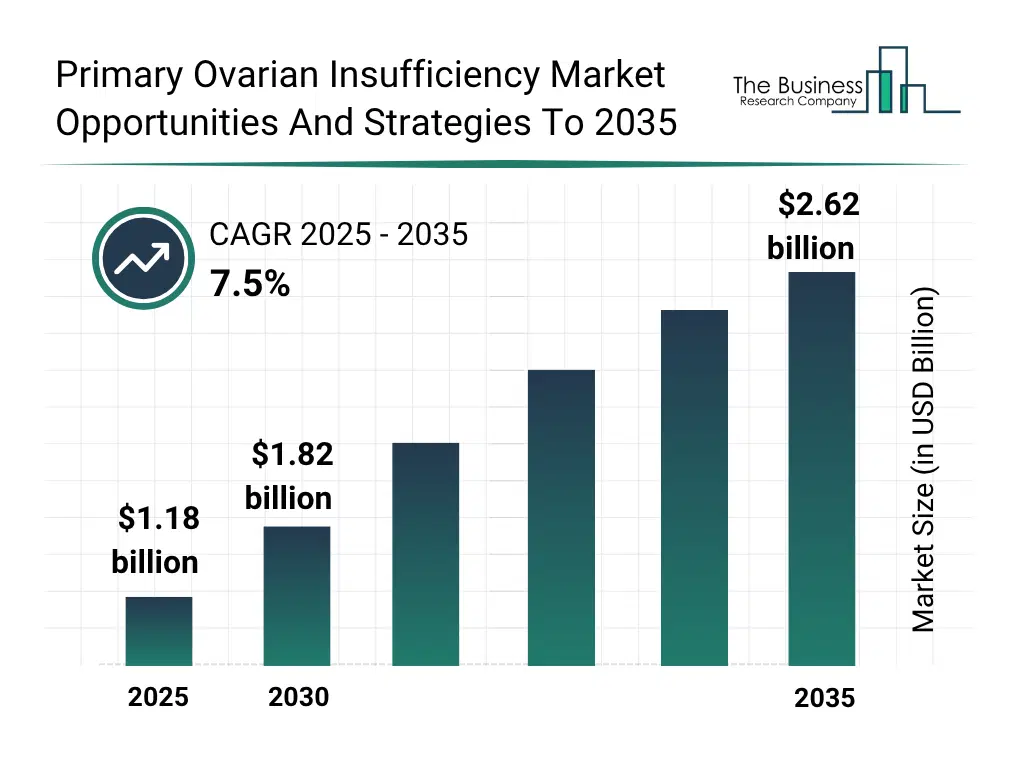
The global primary ovarian insufficiency market reached a value of nearly $1,177.7 million in 2025, having grown at a compound annual growth rate (CAGR) of 9.4% since 2020. The market is expected to grow from $1,177.7 million in 2025 to $1,819.6 million in 2030 at a rate of 9.1%. The market is then expected to grow at a CAGR of 7.5% from 2030 and reach $2,615.6 million in 2035. Growth in the historic period resulted from the rising female infertility rates, increasing prevalence of primary ovarian insufficiency (POI), rising adoption of hormone replacement therapy (HRT) and growing use of genetic screening and testing. Factors that negatively affected growth in the historic period were high cost of hormone and fertility treatments and limited access to specialized reproductive healthcare. Going forward, the growing healthcare expenditure on women’s health, increasing incidence of lifestyle-related disorders, improved access to specialized women’s healthcare services and expansion of awareness and education campaigns will drive the growth. Factors that could hinder the growth of the primary ovarian insufficiency market in the future include limited awareness and delayed diagnosis, lack of standardized clinical guidelines and impact of trade war and tariff.Primary Ovarian Insufficiency Market Segmentation
The primary ovarian insufficiency market is segmented by type, by diagnosis method, by application and by end-user industry.By Type –
The primary ovarian insufficiency market is segmented by type into:
- a) Hormone Replacement Therapy (HRT)
- b) Calcium And Vitamin D Supplements
- c) In Vitro Fertilization (IVF)
- d) Stem Cell Therapy
- e) Other Types
By Diagnosis Method –
The primary ovarian insufficiency market is segmented by diagnosis method into:
- a) Blood Tests
- b) Ultrasound Imaging
- c) Genetic Testing
By Application –
The primary ovarian insufficiency market is segmented by application into:
- a) Less Than 20 Years Old
- b) 20 To 30 Years Old
- c) 30 To 45 Years Old
- d) 45 Years Old And Older
By End-User –
The primary ovarian insufficiency market is segmented by end-user into:
- a) Hospitals And Clinics
- b) Specialty Fertility Centers
By Geography - The primary ovarian insufficiency market is segmented by geography into:
- • China
- • India
- • Japan
- • Australia
- • Indonesia
- • South Korea
- • USA
- • Canada
- • Brazil
- • France
- • Germany
- • UK
- • Italy
- • Spain
- • Russia
-
o Asia Pacific
o Africa