

Pre-Owned Vehicles Global Market Opportunities And Strategies To 2035
By Vehicle Type (Two Wheelers, Three Wheelers, Passenger Vehicles, Light Commercial Vehicles, Heavy Duty Trucks, Buses And Coaches, Off-Road Vehicles), By Propulsion (Gasoline, Diesel, Electric), By Certification Status (Certified Pre-Owned (CPO), Non-Certified Vehicles), By Mode Of Selling (Online, Dealership Walk-Ins), By Distribution Channel (Organized Dealers, Multi Brand Retailers, Direct Dealership Sales Agents, Unorganized Dealers, Other Distribution Channels), And By Region, Opportunities And Strategies – Global Forecast To 2035
Pre-Owned Vehicles Market Definition
Pre-owned vehicles refer to cars, motorcycles, or other motor vehicles that have been previously owned, used, or registered by one or more individuals or businesses before being sold again in the market. These vehicles are typically offered through dealerships, certified pre-owned programs, online platforms, or private sales. The primary purpose of the pre-owned vehicle market is to provide cost-effective mobility options, reduce depreciation-related losses for buyers and support a more sustainable automotive ecosystem by extending vehicle life cycles. The pre-owned vehicles market consists of sales, by entities (organizations, sole traders, or partnerships), of pre-owned vehicles that have been previously registered, used by one or more owners and subsequently offered for resale for continued operational use. These sales include transactions across all major vehicle categories and propulsion types and are facilitated through organized dealerships, multi-brand retailers, online platforms, direct sales agents, unorganized dealers and other distribution channels.
Pre-Owned Vehicles Market Size
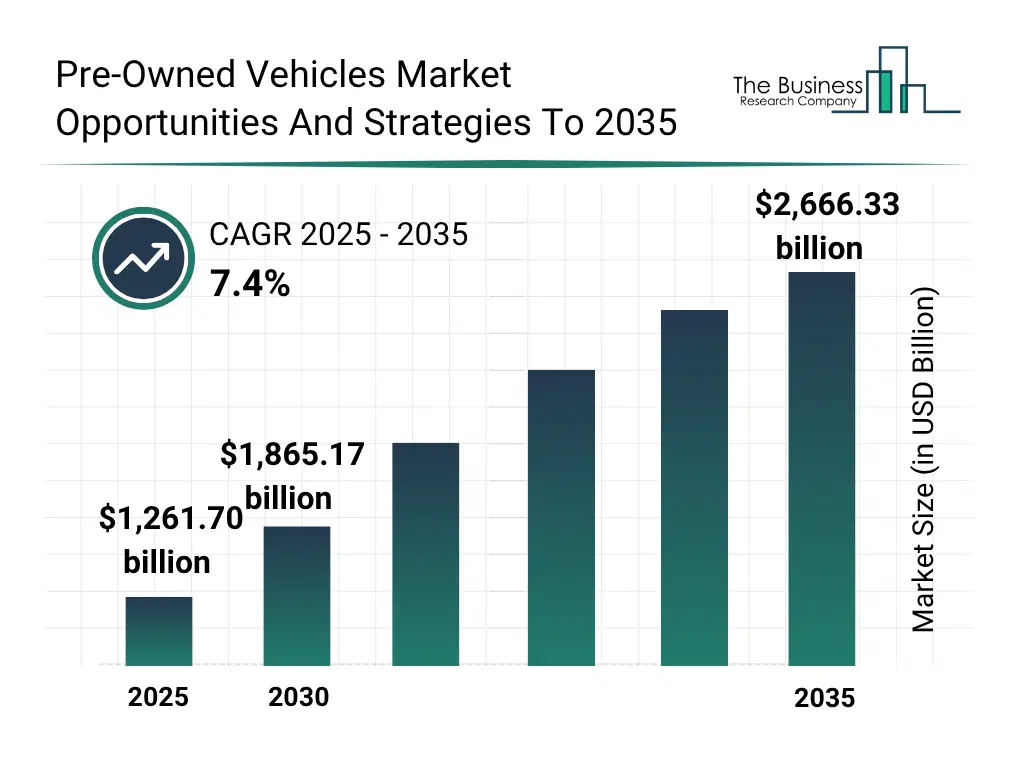
The global pre-owned vehicles market reached a value of nearly $1,261,699.7 million in 2025, having grown at a compound annual growth rate (CAGR) of 10.6% since 2020. The market is expected to grow from $1,261,699.7 million in 2025 to $ 1,865,168.2 million in 2030 at a rate of 8.1%. The market is then expected to grow at a CAGR of 7.4% from 2030 and reach $2,666,325.5 million in 2035. Growth in the historic period resulted from increasing urban congestion and parking constraints, government push for vehicle scrappage and renewal programs, increased usage of commercial vehicles and expansion of vehicle financing options for used cars. Factors that negatively affected growth in the historic period were high risk of fraud, odometer tampering and hidden vehicle history and low consumer trust due to inconsistent dealer practices. Going forward, increasing demand for vehicles, rising new vehicle prices, expansion of subscription and leasing models and rapid growth of online used vehicle platforms will drive the growth. Factor that could hinder the growth of the pre-owned vehicles market in the future include variability in resale values, uneven quality and low-mileage cars and impact of trade war and tariff.Pre-Owned Vehicles Market Segmentation
The pre-owned vehicles market is segmented by vehicle type, by propulsion, by certification status, by mode of selling and by distribution channel.By Vehicle Type –
The pre-owned vehicles market is segmented by vehicle type into:
- a) Two Wheelers
- b) Three Wheelers
- c) Passenger Vehicles
- d) Light Commercial Vehicles
- e) Heavy Duty Trucks
- f) Buses And Coaches
- g) Off-Road Vehicles
By Propulsion –
The pre-owned vehicles market is segmented by propulsion into:
- a) Gasoline
- b) Diesel
- c) Electric
By Certification Status –
The pre-owned vehicles market is segmented by certification status into:
- a) Certified Pre-Owned (CPO)
- b) Non-Certified Vehicles
By Mode Of Selling –
The pre-owned vehicles market is segmented by mode of selling into:
- a) Online
- b) Dealership Walk-Ins
By Distribution Channel –
The pre-owned vehicles market is segmented by distribution channel into:
- a) Organized Dealers
- b) Multi Brand Retailers
- c) Direct Dealership Sales Agents
- d) Unorganized Dealers
- e) Other Distribution Channels
By Geography - The pre-owned vehicles market is segmented by geography into:
- • China
- • India
- • Japan
- • Australia
- • Indonesia
- • South Korea
- • USA
- • Canada
- • Brazil
- • France
- • Germany
- • UK
- • Italy
- • Spain
- • Russia
-
o Asia Pacific
o Africa