
Packaged Food Global Market Opportunities And Strategies To 2035
By Type (Dairy Products, Confectionery, Seasonings And Preserved Foods, Bakery And Snack, Meat, Poultry And Seafood, Ready Meals, Other Types), By Material (Glass, Metal, Paper, Plastics, Other Materials), By Packaging (Jugs, Packets, Bottles, Bags, Bowls, Boxes, Cans, Cartons, Crates), By Sales Channel (Supermarkets Or Hypermarkets, Specialty Stores, Grocery Stores, Online Stores, Other Sales Channels), And By Region, Opportunities And Strategies – Global Forecast To 2035
Packaged Food Market Definition
Packaged food market refers to the industry comprising products that are processed and sealed in pre-prepared containers to preserve freshness, ensure safety and provide convenience. These products range from simple, minimally processed items to fully cooked, ready-to-eat meals. Packaged food is widely consumed across various user groups including households, students, professionals, travelers and institutions such as hospitals, schools and defense organizations. It is used for daily consumption, emergency food supply, outdoor activities and situations requiring long shelf-life or minimal preparation. The packaged food market consists of sales, by entities (organizations, sole traders, or partnerships) that are used at home, on-the-go, or in institutional settings, packaged food is a substitute for fresh or home-cooked meals and dining-out options.
Packaged Food Market Size
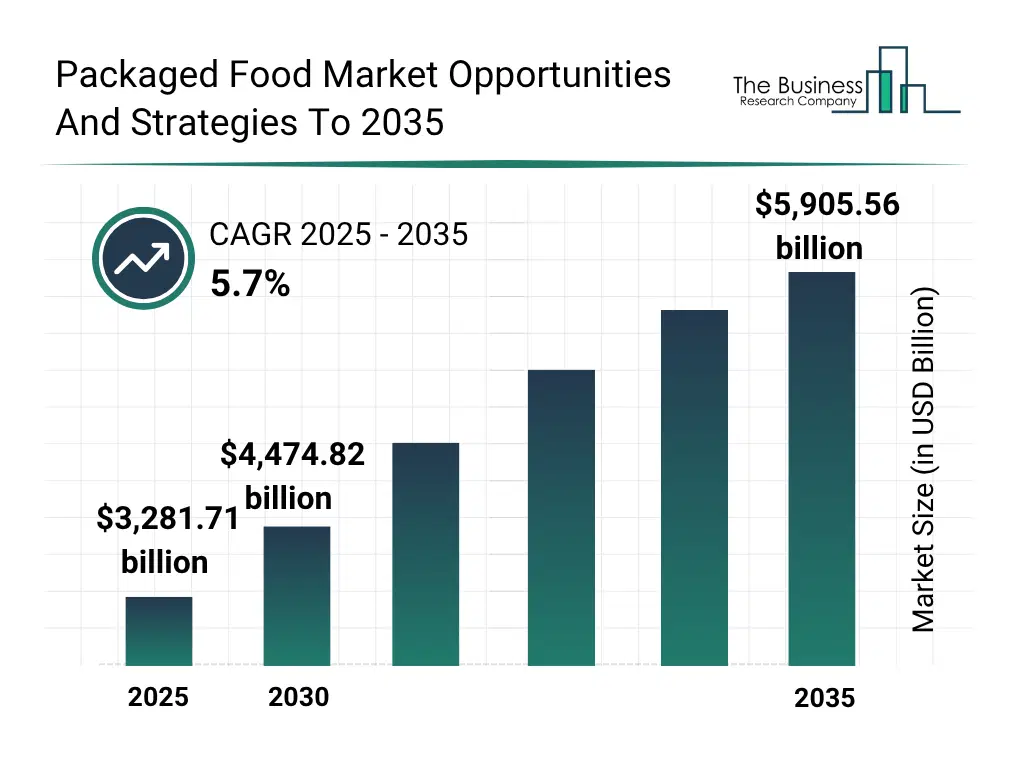
The global packaged food market reached a value of nearly $3,281,706.1 million in 2025, having grown at a compound annual growth rate (CAGR) of 6.1% since 2020. The market is expected to grow from $3,281,706.1 million in 2025 to $4,474,823.2 million in 2030 at a rate of 6.4%. The market is then expected to grow at a CAGR of 5.7% from 2030 and reach $5,905,563.2 million in 2035. Growth in the historic period resulted from the rise in food safety regulations, changing consumer lifestyles, rising food service sector and rising health consciousness. Factors that negatively affected growth in the historic period were fluctuating raw material prices and rising consumer preference for fresh foods. Going forward, the expanding e-commerce industry, expanding working population, expansion of cold chain infrastructure and demand for convenience and ready-to-eat foods will drive the growth. Factors that could hinder the growth of the packaged food market in the future include short shelf life for certain products; environmental concerns related to plastic and non-recyclable packaging and impact of trade war and tariffs.Packaged Food Market Segmentation
The packaged food market is segmented by type, by material, by packaging and by sales channel.By Type –
The packaged food market is segmented by type into:
- a) Dairy Products
- b) Confectionery
- c) Seasonings And Preserved Foods
- d) Bakery And Snack
- e) Meat, Poultry And Seafood
- f) Ready Meals
- g) Other Types
By Material –
The packaged food market is segmented by material into:
- a) Glass
- b) Metal
- c) paper
- d) Plastics
- e) Other Materials
By Packaging –
The packaged food market is segmented by packaging into:
- a) Jugs
- b) Packets
- c) Bottles
- d) Bags
- e) Bowls
- f) Boxes
- g) Cans
- h) Cartons
- i) Crates
By Sales Channel –
The packaged food market is segmented by sales channel into:
- a) Supermarkets Or Hypermarkets
- b) Specialty Stores
- c) Grocery Stores
- d) Online Stores
- e) Other Sales Channels
By Geography - The packaged food market is segmented by geography into:
- • China
- • India
- • Japan
- • Australia
- • Indonesia
- • South Korea
- • USA
- • Canada
- • Brazil
- • France
- • Germany
- • UK
- • Italy
- • Spain
- • Russia
-
o Asia Pacific
o Africa