
Orthopedic Prosthetics Global Market Opportunities And Strategies To 2035
By Product Type (Upper Extremity Prosthetics, Lower Extremity Prosthetics, Sockets, Other Products), By Technology (Conventional Orthopedic Prosthetics, Electric-Powered Orthopedic Prosthetics, Hybrid Orthopedic Prosthetics), By End Users (Hospitals, Prosthetic Clinics, Rehabilitation Centers, Other End Users), And By Region, Opportunities And Strategies – Global Forecast To 2035
Orthopedic Prosthetics Market Definition
The orthopedic prosthetics are artificial devices designed to replace or support missing, or impaired limbs or joints caused by injury, disease, or congenital conditions. These prosthetic devices include artificial arms, legs, hands, feet, joint replacements and implants, and are engineered using advanced materials, biomechanics, and sometimes microprocessor or sensor-based technologies to mimic natural movement. They help improve quality of life by enabling daily activities, reducing physical limitations, and supporting rehabilitation and long-term physical well-being. The orthopedic prosthetics market consists of sales by entities (organizations, sole traders and partnerships) of orthopedic prosthetics that enable individuals to regain functional movement, improve independence in daily activities and enhance overall quality of life by mimicking the form and function of natural limbs. These products are used by patients across all age groups who require artificial limb replacements for upper or lower extremities. Use of orthopedic prosthetics spans clinical rehabilitation, post‑surgical recovery, long‑term mobility support and activities ranging from routine daily tasks to specialized physical endeavors such as sports or vocational duties.
Orthopedic Prosthetics Market Size
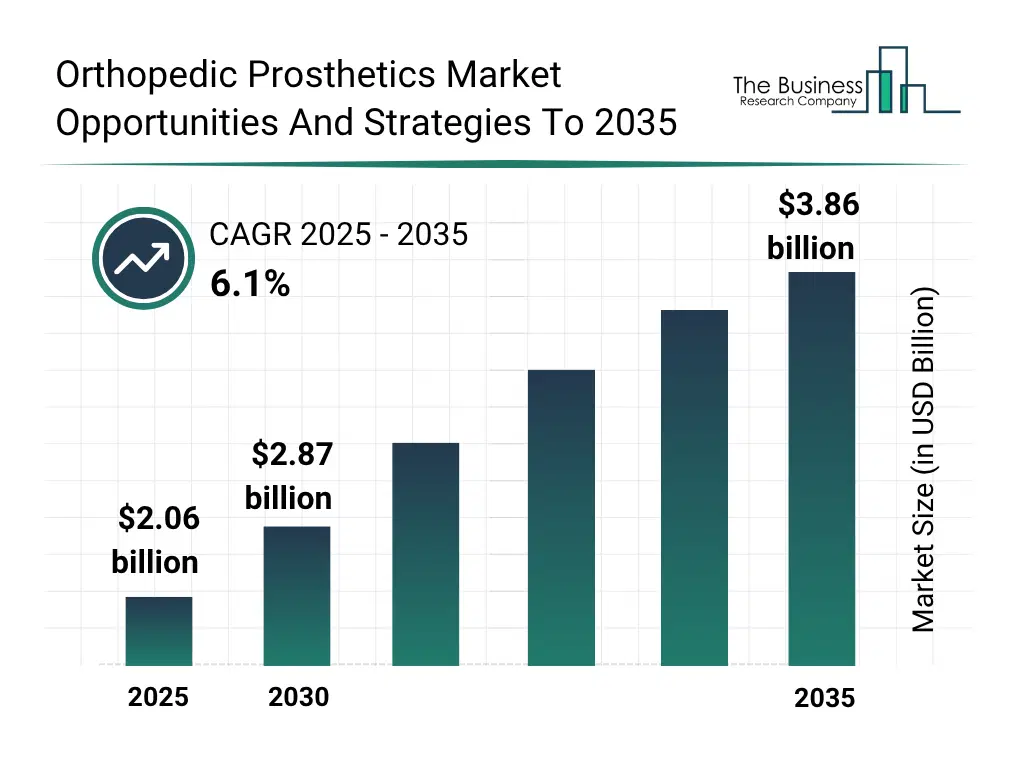
The global orthopedic prosthetics market reached a value of nearly $2,057.1 million in 2025, having grown at a compound annual growth rate (CAGR) of 8.7% since 2020. The market is expected to grow from $2,057.1 million in 2025 to $2,867.0 million in 2030 at a rate of 6.9%. The market is then expected to grow at a CAGR of 6.1% from 2030 and reach $3,862.4 million in 2035. Growth in the historic period resulted from expansion of healthcare expenditure, rise of ambulatory surgical centers, improving healthcare infrastructure and prevalence of vascular diseases. Factors that negatively affected growth in the historic period were lack of trained prosthetists and clinicians and limited access to care in rural/underserved regions. Going forward, increasing aging global population, rising obesity rates and related comorbidities, growth in sports-related injuries and incidence of trauma and accidents will drive the growth. Factors that could hinder the growth of the orthopedic prosthetics market in the future include high product cost and limited reimbursement, patient discomfort and socket-related issues and impact of trade war and tariff.Orthopedic Prosthetics Market Segmentation
The orthopedic prosthetics market is segmented by product type, by technology and by end user.By Product Type –
The orthopedic prosthetics market is segmented by product type into:
- a) Upper Extremity Prosthetics
- b) Lower Extremity Prosthetics
- c) Sockets
- d) Other Products
By Technology –
The orthopedic prosthetics market is segmented by technology into:
- a) Conventional Orthopedic Prosthetics
- b) Electric-Powered Orthopedic Prosthetics
- c) Hybrid Orthopedic Prosthetics
By End User –
The orthopedic prosthetics market is segmented by end user into:
- a) Hospitals
- b) Prosthetic Clinics
- c) Rehabilitation Centers
- d) Other End Users
By Geography - The orthopedic prosthetics market is segmented by geography into:
- • China
- • India
- • Japan
- • Australia
- • Indonesia
- • South Korea
- • Bangladesh
- • Thailand
- • Vietnam
- • Malaysia
- • Singapore
- • Phillipines
- • Hong kong
- • New Zealand
- • USA
- • Canada
- • Mexico
- • Brazil
- • Argentina
- • Chile
- • Colombiia
- • Peru
- • France
- • Germany
- • UK
- • Italy
- • Spain
- • Austria
- • Belgium
- • Denmark
- • Finland
- • Ireland
- • Netherland
- • Norway
- • Portugal
- • Sweden
- • Switzerland
- • Russia
- • Czech Republic
- • Poland
- • Romania
- • Ukraine
- • Saudi Arabia
- • Israel
- • Iran
- • Turkey
- • UAE o Africa
- • Egypt
- • Nigeria
- • South Africa
-
o Asia Pacific