

Microbial Fermentation Technology Global Market Opportunities And Strategies To 2035
By Type (Medical, Industrial, Alcohol Beverages, Food And Feed Products), By Application (Antibiotics, Probiotics Supplements, Monoclonal Antibodies, Recombinant Proteins, Biosimilars, Vaccines, Enzymes, Small Molecules), By End Users (Bio-Pharmaceutical Companies, Contract Research Organizations (CROS), Contract Manufacturing Organization (CMOS) And Contract Development And Manufacturing Organization (CDMOS), Food And Beverage Manufacturers, Industrial Biotechnology Companies, Academic And Research Institutes), And By Region, Opportunities And Strategies – Global Forecast To 2035
Microbial Fermentation Technology Market Definition
Microbial fermentation technology is a biotechnological process that uses microorganisms such as bacteria, yeast, or fungi to convert organic substrates (such as sugars, starches, or biomass) into valuable products under controlled conditions. These products can include enzymes, pharmaceuticals, biofuels, organic acids, alcohols, amino acids, and food ingredients. The primary purpose of microbial fermentation technology is to enable efficient, scalable, and sustainable production of biologically derived products. The microbial fermentation technology market consists of sales, by entities (organizations, sole traders, or partnerships), of products, technologies, and services that utilize microorganisms such as bacteria, yeast, and fungi to produce commercially valuable compounds through controlled fermentation processes. This market includes revenues generated from fermentation equipment, culture media, microbial strains, process technologies, and contract fermentation services used across medical, industrial, food and beverage, feed, and bio-based chemical applications.
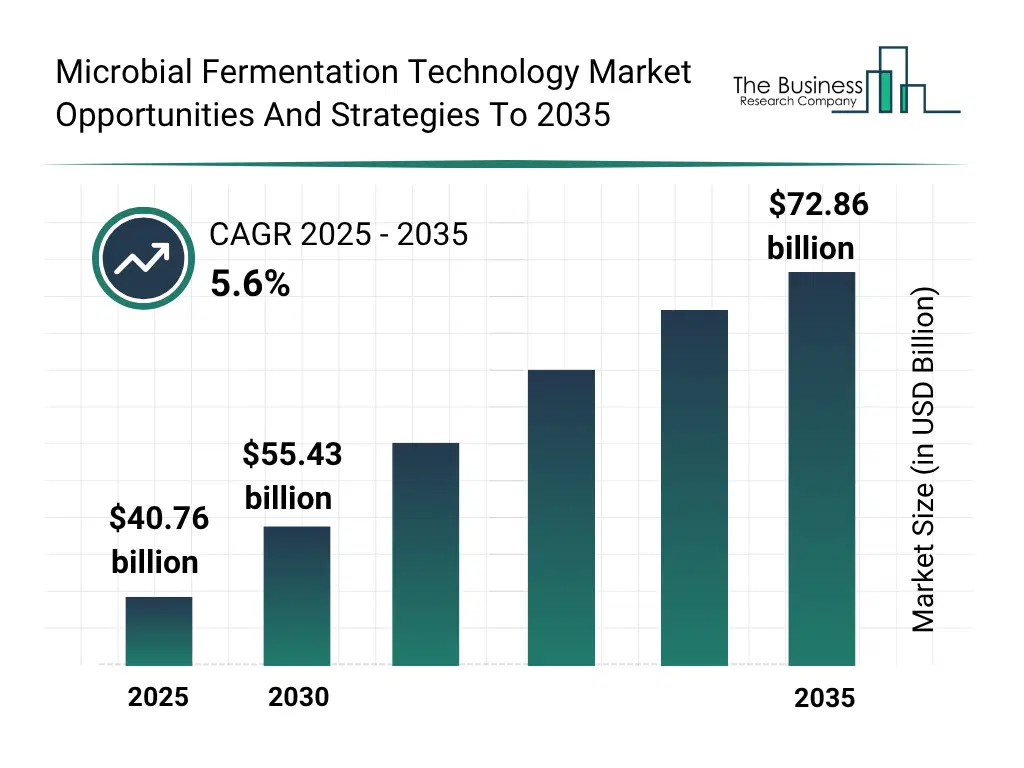
Microbial Fermentation Technology Market Size
The global microbial fermentation technology market reached a value of nearly $40,760 million in 2025, having grown at a compound annual growth rate (CAGR) of 7.1% since 2020. The market is expected to grow from $40,760 million in 2025 to $55,431.9 million in 2030 at a rate of 6.3%. The market is then expected to grow at a CAGR of 5.6% from 2030 and reach $72,856.8 million in 2035. Growth in the historic period resulted from rise in demand for personalized medicine, growing adoption in food and beverage, rising consumer demand for natural and organic food products and increasing demand for alternative proteins. Factors that negatively affected growth in the historic period were strict government regulations and risk of contamination during fermentation. Going forward, expansion of chronic and infectious diseases, advancements in bioprocess automation, rising demand for biopharmaceuticals and expanding use of probiotics, postbiotics, and functional microbiome will drive the growth. Factor that could hinder the growth of the microbial fermentation technology market in the future include high production costs, difficulty in scaling up production and impact of trade war and tariff.Microbial Fermentation Technology Market Segmentation
The microbial fermentation technology market is segmented by type, by application and by end user.By Type –
The microbial fermentation technology market is segmented by type into:
- a) Medical
- b) Industrial
- c) Alcohol beverages
- d) Food and feed products
By Application –
The microbial fermentation technology market is segmented by application into:
- a) Antibiotics
- b) Probiotics supplements
- c) Monoclonal antibodies
- d) Recombinant proteins
- e) Biosimilars
- f) Vaccines
- g) Enzymes
- h) Small molecules
By End User –
The microbial fermentation technology market is segmented by end user into:
- a) Bio-pharmaceutical companies
- b) Contract research organizations (CROS)
- c) Contract manufacturing organization (CMOS) and contract development and manufacturing organization (CDMOS)
- d) Food and beverage manufacturers
- e) Industrial biotechnology companies
- f) Academic and research institutes
By Geography - The microbial fermentation technology market is segmented by geography into:
- • China
- • India
- • Japan
- • Australia
- • Indonesia
- • South Korea
- • USA
- • Canada
- • Brazil
- • France
- • Germany
- • UK
- • Italy
- • Spain
- • Russia
-
o Asia Pacific
o Africa