
Low-Sugar Sports Beverages Market Report 2026
Global Outlook – By Product Type (Isotonic Drinks, Hypotonic Drinks, Hypertonic Drinks, Protein Enriched Drinks, Functional Energy Drinks), By Flavor (Citrus, Berry, Mixed Fruit, Other Flavors), By Sweetener Type (Natural, Artificial, Blended), By Distribution Channel (Supermarkets And Hypermarkets, Convenience Stores, Online Retail, Specialty Sports Stores, Other Channels), By End-User (Athletes, Fitness Enthusiasts, General Consumers) – Market Size, Trends, Strategies, and Forecast to 2035
Low-Sugar Sports Beverages Market Overview
• Low-Sugar Sports Beverages market size has reached to $5.73 billion in 2025 • Expected to grow to $9.12 billion in 2030 at a compound annual growth rate (CAGR) of 9.8% • Growth Driver: Growing Consumer Shift Toward Health And Wellness Fueling The Growth Of The Market Due To Rising Health Awareness • Market Trend: Advancements In Low-Sugar Electrolyte Beverages For Healthier Sports Hydration • North America was the largest region in 2025 and Asia-Pacific is the fastest growing region.
What Is Covered Under Low-Sugar Sports Beverages Market?
The low-Sugar sports beverages are hydration drinks formulated with reduced sugar content compared to traditional sports drinks while still providing essential electrolytes such as sodium, potassium, and magnesium. These beverages help maintain fluid balance, support muscle function, and aid recovery during or after physical activity. They are designed for athletes and fitness consumers seeking effective hydration with lower calorie and sugar intake. The main product types of low-sugar sports beverages are isotonic drinks, hypotonic drinks, hypertonic drinks, protein enriched drinks, and functional energy drinks. Isotonic drinks are specialized beverages designed to quickly replenish fluids, electrolytes, and energy lost during physical activity while maintaining low sugar content for health-conscious consumers. The different flavors include citrus, berry, mixed fruit, and others, and use multiple sweetener types include natural, artificial, and blended, through distribution channels such as supermarkets and hypermarkets, convenience stores, online retail, specialty sports stores, and others, and they are used by several end users such as athletes, fitness enthusiasts, and general consumers.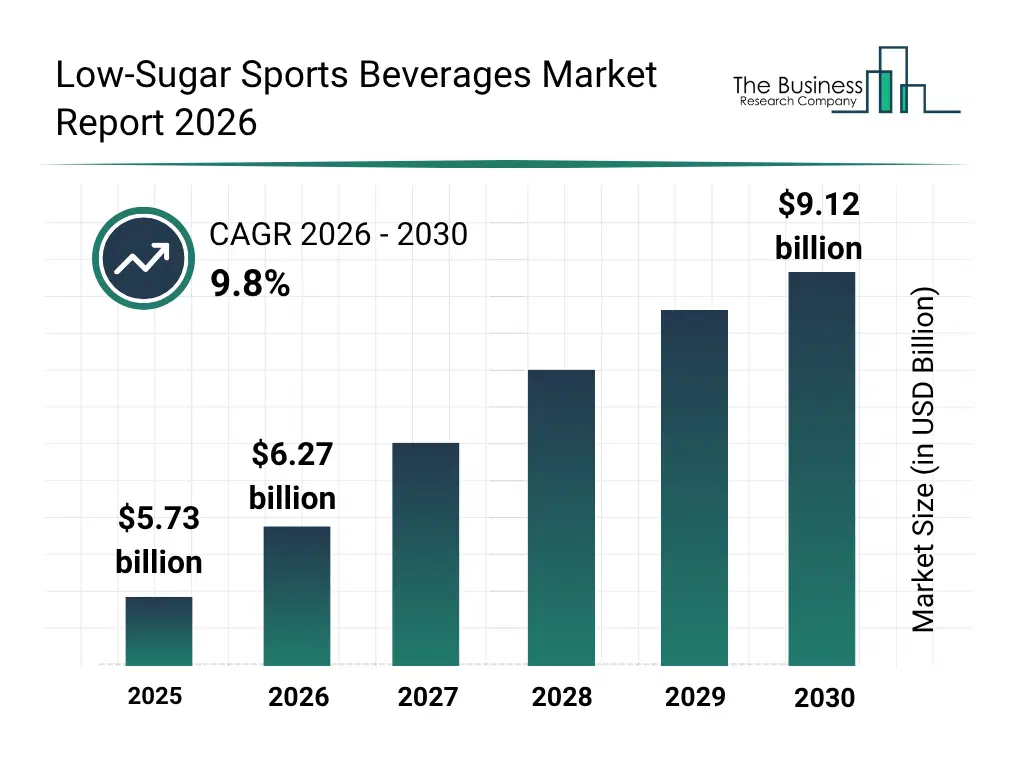
What Is The Low-Sugar Sports Beverages Market Size and Share 2026?
The low-sugar sports beverages market size has grown strongly in recent years. It will grow from $5.73 billion in 2025 to $6.27 billion in 2026 at a compound annual growth rate (CAGR) of 9.6%. The growth in the historic period can be attributed to increasing sports participation, growing awareness of health and wellness, rising demand for low-calorie beverages, expansion of fitness and gym facilities, introduction of innovative hydration products.What Is The Low-Sugar Sports Beverages Market Growth Forecast?
The low-sugar sports beverages market size is expected to see strong growth in the next few years. It will grow to $9.12 billion by 2030 at a compound annual growth rate (CAGR) of 9.8%. The growth in the forecast period can be attributed to increasing adoption of plant-based and natural ingredients, growing online retail penetration, rising interest in personalized nutrition, advancements in functional beverage formulations, expansion of global fitness and athletic events. Major trends in the forecast period include rising demand for low-sugar hydration solutions, growth in functional and protein-enriched sports beverages, increasing consumer preference for natural and plant-based ingredients, expansion of online and specialty sports retail channels, focus on personalized nutrition and performance optimization.Global Low-Sugar Sports Beverages Market Segmentation
1) By Product Type: Isotonic Drinks, Hypotonic Drinks, Hypertonic Drinks, Protein Enriched Drinks, Functional Energy Drinks 2) By Flavor: Citrus, Berry, Mixed Fruit, Other Flavors 3) By Sweetener Type: Natural, Artificial, Blended 4) By Distribution Channel: Supermarkets And Hypermarkets, Convenience Stores, Online Retail, Specialty Sports Stores, Other Channels 5) By End-User: Athletes, Fitness Enthusiasts, General Consumers Subsegments: 1) By Isotonic Drinks: Ready To Drink Isotonic Beverages, Powdered Isotonic Mixes, Effervescent Isotonic Tablets, Natural Ingredient Based Isotonic Drinks, Plant Based Isotonic Drinks 2) By Hypotonic Drinks: Electrolyte Enhanced Water, Low Carbohydrate Hydration Drinks, Zero Sugar Hypotonic Beverages, Mineral Infused Hypotonic Drinks, Herbal Extract Based Hypotonic Drinks 3) By Hypertonic Drinks: High Carbohydrate Recovery Drinks, Glucose Rich Energy Beverages, Endurance Performance Drinks, Post Workout Glycogen Replenishment Drinks, Concentrated Sports Fuel Drinks 4) By Protein Enriched Drinks: Whey Protein Sports Drinks, Plant Protein Sports Beverages, Collagen Infused Recovery Drinks, Branched Chain Amino Acid Fortified Drinks, High Protein Meal Replacement Sports Drinks 5) By Functional Energy Drinks: Caffeine Infused Sports Drinks, Vitamin Fortified Energy Beverages, Adaptogen Based Energy Drinks, Amino Acid Enhanced Energy Drinks, Natural Fruit Extract Energy DrinksWhat Is The Driver Of The Low-Sugar Sports Beverages Market?
The growing consumer shift toward health and wellness is fueling the growth of the low-sugar sports beverages market due to rising health awareness. Health and wellness refer to the growing awareness and proactive behavior among individuals toward maintaining overall physical and mental well-being through preventive care, healthy lifestyle choices, and regular medical and dental checkups. The growing consumer shift toward health and wellness is due to increasing awareness of lifestyle-related diseases, encouraging people to adopt healthier diets and wellness-focused products for long-term well-being. Low-sugar sports beverages support health and wellness by offering hydration solutions that reduce overall sugar intake while still replenishing essential electrolytes lost during physical activity. For instance, in June 2024, according to the International Food Information Council (IFIC), a US-based non-profit organization, the proportion of Americans following a specific diet or eating pattern over the past year remains high at 54%. Most people are looking to increase their protein intake, with interest climbing from 59% in 2022 to 67% in 2023 and reaching 71% in 2024. Additionally, roughly half of consumers aim to eat more fresh foods, which are widely considered the healthiest options. Therefore, a growing consumer shift toward health and wellness is driving the growth of the low-sugar sports beverages industry.Key Players In The Global Low-Sugar Sports Beverages Market
Major companies operating in the low-sugar sports beverages market are Nestlé S.A., The Coca-Cola Company, Abbott Laboratories, Glanbia plc, Prime Hydration LLC, Zevia PBC, Nutrabolt Ltd., Amway Corporation, Skratch Labs LLC, Hydrant Inc., DripDrop Inc., High5 Sports Nutrition Ltd., Prestige Consumer Healthcare Inc., World Waters LLC, Ultima Health Products Inc., PLEZi Nutrition Inc., Precision Fuel & Hydration Ltd., Ryno Power Inc., GoodSport Nutrition LLC, Boost Nutraceuticals LLC, SOS Hydration Inc.Global Low-Sugar Sports Beverages Market Trends and Insights
Major companies operating in the low-sugar sports beverages market are focusing on developing advanced products, such as lower-sugar sports drinks without artificial ingredients, to enhance hydration efficiency, electrolyte balance, and consumer demand for healthier sports nutrition options. Lower-sugar sports drinks without artificial ingredients are hydration beverages made with reduced sugar and natural components, without artificial sweeteners, colors, or preservatives, designed to restore electrolytes and support physical performance. For instance, in October 2025, PepsiCo’s Gatorade, a US-based sports nutrition and beverage company, introduced Gatorade Lower Sugar to enhance hydration support and provide a reduced-sugar option for health-conscious consumers seeking a sports drink. The drink contains 75% less sugar than traditional sports drinks while still delivering essential electrolytes such as sodium and potassium to support hydration during physical activity. It is designed to provide effective fluid replenishment with fewer calories, targeting athletes and consumers seeking healthier sports hydration options. The new sports drink contains no artificial flavors, sweeteners, or colors from artificial sources while still delivering the bold Gatorade color that athletes recognize and enjoy.What Are Latest Mergers And Acquisitions In The Low-Sugar Sports Beverages Market?
In April 2025, Celsius Holdings, Inc., a US-based provider of functional beverages, acquired Alani Nutrition LLC (Alani Nu) for $1.8 billion. With this acquisition, Celsius Holdings aims to broaden its functional beverage portfolio and strengthen its reach into the fast-growing market for healthier, zero-sugar alternatives and better-for-you lifestyle drinks while expanding its consumer base and market presence. Alani Nu is a US-based health and wellness company specializing in nutritional supplements, sugar-free energy drinks, and functional beverages.Regional Insights
North America was the largest region in the low sugar sports beverages market in 2025. Asia-Pacific is expected to be the fastest-growing region in the forecast period. The regions covered in this market report are Asia-Pacific, South East Asia, Western Europe, Eastern Europe, North America, South America, Middle East, Africa. The countries covered in this market report are Australia, Brazil, China, France, Germany, India, Indonesia, Japan, Taiwan, Russia, South Korea, UK, USA, Canada, Italy, Spain.What Defines the Low-Sugar Sports Beverages Market?
The low sugar sports beverages market consists of sales of low sugar sports drinks, electrolyte drinks, vitamin enriched beverages, natural flavored beverages, protein enhanced drinks and herbal infused drinks. Values in this market are ‘factory gate’ values, that is, the value of goods sold by the manufacturers or creators of the goods, whether to other entities (including downstream manufacturers, wholesalers, distributors, and retailers) or directly to end customers. The value of goods in this market includes related services sold by the creators of the goods.How is Market Value Defined and Measured?
The market value is defined as the revenues that enterprises gain from the sale of goods and/or services within the specified market and geography through sales, grants, or donations in terms of the currency (in USD unless otherwise specified). The revenues for a specified geography are consumption values that are revenues generated by organizations in the specified geography within the market, irrespective of where they are produced. It does not include revenues from resales along the supply chain, either further along the supply chain or as part of other products.What Key Data and Analysis Are Included in the Low-Sugar Sports Beverages Market Report 2026?
The low-sugar sports beverages market research report is one of a series of new reports from The Business Research Company that provides market statistics, including industry global market size, regional shares, competitors with the market share, detailed market segments, market trends and opportunities, and any further data you may need to thrive in the low-sugar sports beverages industry. The market research report delivers a complete perspective of everything you need, with an in-depth analysis of the current and future state of the industry.Low-Sugar Sports Beverages Market Report Forecast Analysis
| Report Attribute | Details |
|---|---|
| Market Size Value In 2026 | $6.27 billion |
| Revenue Forecast In 2035 | $9.12 billion |
| Growth Rate | CAGR of 9.6% from 2026 to 2035 |
| Base Year For Estimation | 2025 |
| Actual Estimates/Historical Data | 2020-2025 |
| Forecast Period | 2026 - 2030 - 2035 |
| Market Representation | Revenue in USD Billion and CAGR from 2026 to 2035 |
| Segments Covered | Product Type, Flavor, Sweetener Type, Distribution Channel, End-User |
| Regional Scope | Asia-Pacific, Western Europe, Eastern Europe, North America, South America, Middle East, Africa |
| Country Scope | The countries covered in the report are Australia, Brazil, China, France, Germany, India, ... |
| Key Companies Profiled | Nestlé S.A., The Coca-Cola Company, Abbott Laboratories, Glanbia plc, Prime Hydration LLC, Zevia PBC, Nutrabolt Ltd., Amway Corporation, Skratch Labs LLC, Hydrant Inc., DripDrop Inc., High5 Sports Nutrition Ltd., Prestige Consumer Healthcare Inc., World Waters LLC, Ultima Health Products Inc., PLEZi Nutrition Inc., Precision Fuel & Hydration Ltd., Ryno Power Inc., GoodSport Nutrition LLC, Boost Nutraceuticals LLC, SOS Hydration Inc. |
| Customization Scope | Request for Customization |
| Pricing And Purchase Options | Explore Purchase Options |