
Smart Homes Global Market Opportunities And Strategies To 2035
By Product (Lighting Control, Security And Access Control, Heating, Ventilation And Air Conditioning (HVAC) Control, Entertainment Control And Other Controls, Smart Kitchen, Home Appliances, Other Products), By Software And Services (Behavioral, Proactive), By Sales Channel (Direct, Indirect), By Technology (Wireless Technology, Cellular Network Technology), And By Region, Opportunities And Strategies – Global Forecast To 2035
Smart Homes Market Definition
A smart home is a residence equipped with devices that are connected through a network (often the Internet) to allow remote management and monitoring. These devices, also known as smart devices or home automation devices, can include smart speakers, thermostats, lights, security cameras, door locks and appliances. The primary goal of a smart home is to improve convenience, security, energy efficiency and comfort by allowing users to control various aspects of their home environment through a smartphone app, voice commands or automated settings.The smart homes market consists of sales, by entities (organizations, sole traders and partnerships), of smart home solutions (products, software and services) that enable automation, remote control and monitoring of home functions for convenience, security and energy efficiency.
Smart Homes Market Size
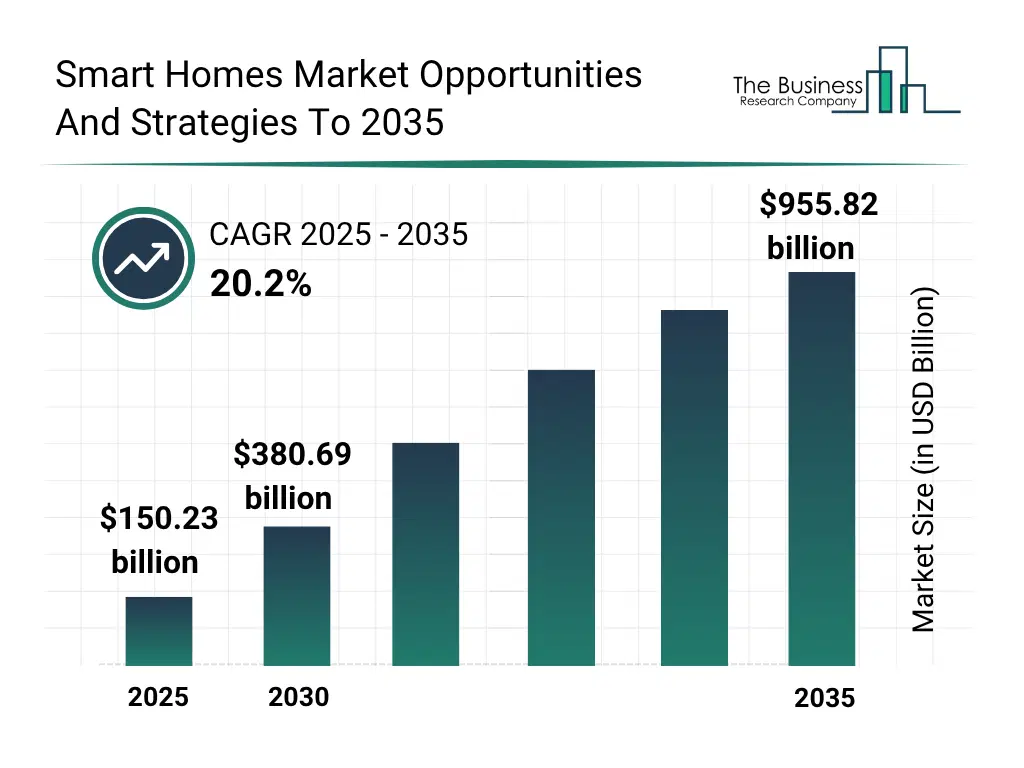
The global smart homes market reached a value of nearly $150,232.6 million in 2025, having grown at a compound annual growth rate (CAGR) of 18.3% since 2020. The market is expected to grow from $150,232.6 million in 2025 to $380,689.2 million in 2030 at a rate of 20.4%. The market is then expected to grow at a CAGR of 20.2% from 2030 and reach $955,821.3 million in 2035. Growth in the historic period resulted from government incentives for smart housing, rise in deployment of 5g networks, expansion of smart city development initiatives and rising smartphone usage and internet penetration. Factors that negatively affected growth in the historic period were supply chain disruptions and electronic waste and sustainability concerns. Going forward, the increasing adoption of IoT solutions, growing importance of smart security and surveillance systems, rising demand for energy efficiency solutions and increase in work-from-home trends will drive the growth. Factor that could hinder the growth of the smart homes market in the future include impact of trade war and tariff, privacy and security concerns and complexity in setup and use.Smart Homes Market Segmentation
The smart homes market is segmented by product, by software and services, by sales channel and by technology.By Product –
The smart homes market is segmented by product into:
- a) Lighting Control
- b) Security And Access Control
- c) Heating, Ventilation And Air Conditioning (HVAC) Control
- c) Entertainment Control And Other Controls
- c) Smart Kitchen Control
- c) Home Appliances
- c) Other Products
By Software And Services –
The smart homes market is segmented by software and services into:
- a) Behavioral
- b) Proactive
By Sales Channel –
The smart homes market is segmented by sales channel into:
- a) Direct
- b) Indirect
By Technology –
The smart homes market is segmented by technology into:
- a) Wireless Technology
- b) Cellular Network Technology
By Geography - The smart homes market is segmented by geography into:
- China
- India
- Japan
- Australia
- Indonesia
- South Korea
- USA
- Canada
- Brazil
- France
- Germany
- UK
- Italy
- Spain
- Russia
-
o Asia Pacific
o Africa