

Nutritional Supplements Global Market Opportunities And Strategies To 2035
By Type (Vegan Sport Nutrition, Meal Replacement Shakes, Food Supplements, Other Types), By Formulation (Tablets, Capsules, Powder, Soft Gels, Liquid, Other Formulations), By Ingredient (Botanicals, Vitamins, Minerals, Proteins And Amino Acids, Fish Oils, Fibers And Specialty Carbohydrates, Enzymes, Other Ingredients), By Distribution Channel (Supermarket/Hypermarket, Retail Pharmacies, Direct Selling, Drug Stores, E-Commerce), By End-User (Infant, Children, Adults, Pregnant Women, Elderly), And By Region, Opportunities And Strategies – Global Forecast To 2035
Nutritional Supplements Market Definition
Nutritional supplements refer to products intended to supplement the diet and provide nutrients, such as vitamins, minerals, proteins, amino acids, botanicals, enzymes, and other substances that may be missing or not consumed in sufficient quantities in a person's diet. These products are available in various forms including tablets, capsules, powders, soft gels, and liquids. They are designed to support overall health, prevent nutrient deficiencies, and assist in managing specific health conditions or performance goals. The nutritional supplements market consists of sales of nutritional products by entities (organizations, sole traders, or partnerships) that are primarily used by consumers across all age groups—infants, children, adults, pregnant women, and the elderly—to supplement dietary intake, support physical performance, manage weight, and maintain or improve general health. These supplements are widely distributed through supermarkets/hypermarkets, retail pharmacies, direct selling, drug stores, and e-commerce platforms.
Nutritional Supplements Market Size
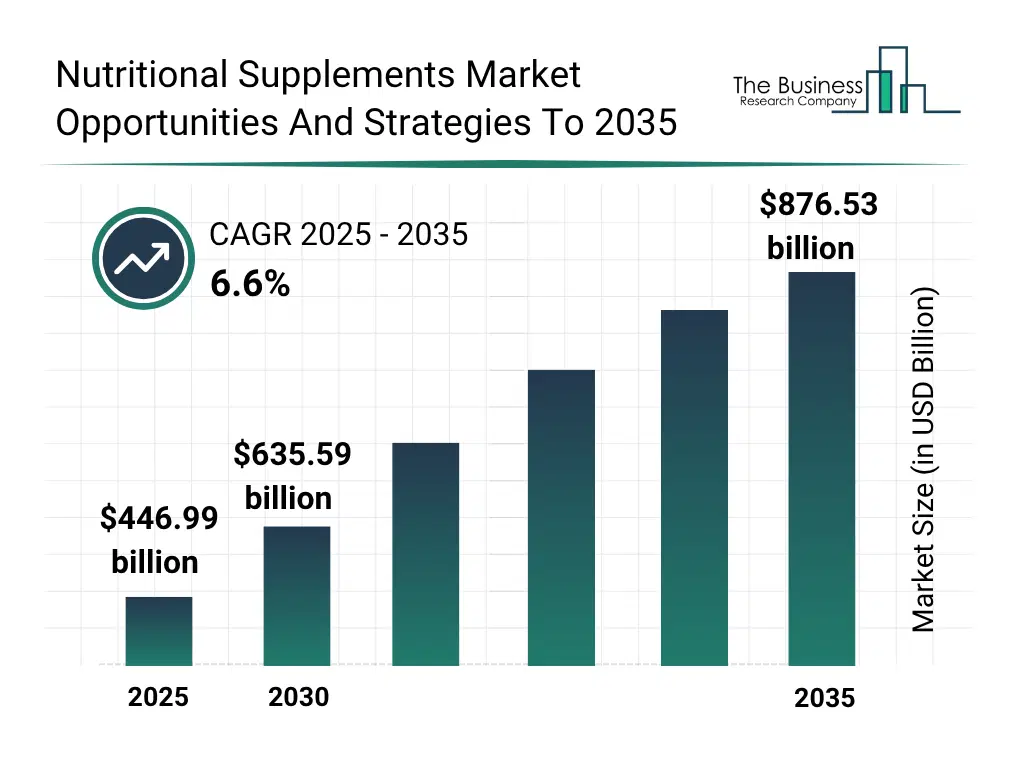
The global nutritional supplements market reached a value of nearly $446,991.5 million in 2025, having grown at a compound annual growth rate (CAGR) of 7.6% since 2020. The market is expected to grow from $446,991.5 million in 2025 to $635,585.5 million in 2030 at a rate of 7.3%. The market is then expected to grow at a CAGR of 6.6% from 2030 and reach $876,527.5 million in 2035. Growth in the historic period resulted from the government initiatives for nutritional awareness, increasing consumer interest in personalized nutrition, vitamin deficiency prevalence and shift towards plant-based alternatives. Factors that negatively affected growth in the historic period were high price sensitivity in developing economies and stricter regulatory oversight and product recalls. Going forward, the increasing prevalence of chronic diseases, rise in aging population, boom in gym memberships and increasing fitness and sports nutrition will drive the growth. Factors that could hinder the growth of the nutritional supplements market in the future include supply chain vulnerability, adulteration and quality control concerns and impact of trade war and tariffs.Nutritional Supplements Market Segmentation
The nutritional supplements market is segmented by type, by formulation, by ingredient, by distribution channel and by end-user.By Type –
The nutritional supplements market is segmented by type into:
- a) Vegan Sport Nutrition
- b) Meal Replacement Shakes
- c) Food Supplements
- d) Other Types
By Formulation –
The nutritional supplements market is segmented by platform into:
- a) Tablets
- b) Capsules
- c) Powder
- d) Soft Gels
- e) Liquid
- f) Other Formulations
By Ingredient –
The nutritional supplements market is segmented by ingredient into:
- a) Botanicals
- b) Vitamins
- c) Minerals
- d) Proteins And Amino Acids
- e) Fish Oils
- f) Fibers And Specialty Carbohydrates
- g) Enzymes
- h) Other Ingredients
By Distribution Channel –
The nutritional supplements market is segmented by distribution channel into:
- a) Supermarket/Hypermarket
- b) Retail Pharmacies
- c) Direct Selling
- d) Drug Stores
- e) E-Commerce
By End-User –
The nutritional supplements market is segmented by end-user into:
- a) Infant
- b) Children
- c) Adults
- d) Pregnant Women
- e) Elderly
By Geography - The nutritional supplements market is segmented by geography into:
- China
- India
- Japan
- Australia
- Indonesia
- South Korea
- USA
- Canada
- Brazil
- France
- Germany
- UK
- Italy
- Spain
- Russia
-
o Asia Pacific
o Africa