
Non-Alcoholic Beer Global Market Opportunities And Strategies To 2035
By Product (Alcohol-Free, Low Alcohol), By Material (Malted Grains, Hops, Yeasts, Enzymes, Other Materials), By Category (Plain, Flavored), By Distribution Channel (Store-Based, Non-Store-Based), And By Region, Opportunities And Strategies – Global Forecast To 2035
Non-Alcoholic Beer Market Definition
Non-alcoholic beer refers to a fermented malt-based beverage that undergoes a brewing process similar to traditional beer but has its alcohol content reduced to below 0.5% ABV (alcohol by volume) or completely removed. It includes both alcohol-free beer (0.0% ABV) and low-alcohol beer (0.5% to below 1.2% ABV depending on regional definitions). Non-alcoholic beer is produced using methods such as vacuum distillation, reverse osmosis, arrested fermentation and dealcoholization technologies that strip or limit alcohol while preserving the beer's flavor, carbonation and aroma profile. The non-alcoholic beer market consists of sales, by entities (organizations, sole traders, or partnerships) that are primarily consumed by health-conscious individuals, religious and cultural abstainers, athletes and active lifestyle consumers, designated drivers and individuals participating in mindful or sober-curious movements. These products are sold through both store-based channels (supermarkets, hypermarkets, specialty beverage retailers, convenience stores) and non-store-based channels (e-commerce platforms, direct-to-consumer delivery services). Non-alcoholic beer serves as a functional and social substitute for alcoholic beer in settings where alcohol consumption is restricted, undesired or socially discouraged.
Non-Alcoholic Beer Market Size
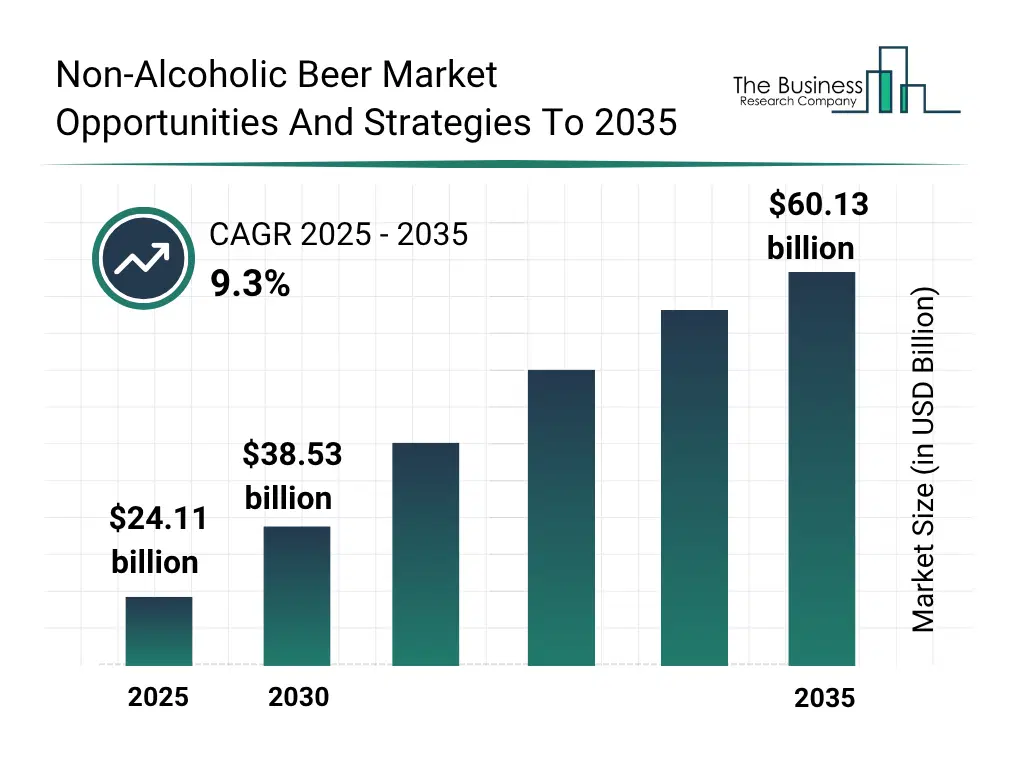
The global non-alcoholic beer market reached a value of nearly $24,112.5 million in 2025, having grown at a compound annual growth rate (CAGR) of 9.8% since 2020. The market is expected to grow from $24,112.5 million in 2025 to $38,525.5 million in 2030 at a rate of 9.8%. The market is then expected to grow at a CAGR of 9.3% from 2030 and reach $60,128.2 million in 2035. Growth in the historic period resulted from rising health consciousness, rising alcohol taxes prompting consumers to switch, younger demographic preference for functional beverages and shift toward mindful drinking habits. Factors that negatively affected growth in the historic period were higher production costs and competition from other non-alcoholic beverages. Going forward, expanding e-commerce, rising awareness of diseases caused due to alcoholic beverages, higher participation in sports and fitness activities and increasing regulatory support limiting alcohol consumption in public places will drive the growth. Factors that could hinder the growth of the non-alcoholic beer market in the future include perception of inferior taste, cultural preference for alcoholic beverages and impact of trade war and tariff.Non-Alcoholic Beer Market Segmentation
The non-alcoholic beer market is segmented by product, by material, by category and by distribution channel.By Product–
The non-alcoholic beer market is segmented by product into:
- a) Alcohol-Free
- b) Low Alcohol
By Material–
The non-alcoholic beer market is segmented by material into:
- a) Malted Grains
- b) Hops
- c) Yeasts
- c) Enzymes
- d) Other Materials
By Category–
The non-alcoholic beer market is segmented by category into:
- a) Plain
- b) Flavored
By Distribution Channel–
The non-alcoholic beer market is segmented by distribution channel into:
- a) Store-Based
- b) Non-Store-Based
By Geography - The non-alcoholic beer market is segmented by geography into:
- China
- India
- Japan
- Australia
- Indonesia
- South Korea
- USA
- Canada
- Brazil
- France
- Germany
- UK
- Italy
- Spain
- Russia
-
o Asia Pacific
o Africa