
Food Pathogen Testing Global Market Opportunities And Strategies To 2035
By Type (E.coli, Salmonella, Listeria, Other Pathogens), By Technology (Traditional, Immunoassay, PCR, Other Technologies), By Application (Meat And Poultry, Fruits And Vegetables, Dairy, Other Applications), By End-User (Food Manufacturers, Food Retailers, Quality Control Laboratories, Government Agencies), And By Region, Opportunities And Strategies – Global Forecast To 2035
Food Pathogen Market Definition
Food pathogen testing refers to the process of detecting harmful microorganisms such as bacteria, viruses and parasites in food products to ensure that they are safe for consumption. These tests are designed to identify pathogens that can cause foodborne illnesses, outbreaks, or spoilage, making them a critical component of modern food safety programs. The food pathogen testing market consists of sales, by entities (organizations, sole traders, or partnerships) of food pathogen testing services used to identify microbial contaminants in food. These entities include diagnostic kit manufacturers, laboratory service providers, equipment suppliers and technology developers, all of whom contribute to the detection of pathogens in raw, processed and packaged food.
Food Pathogen Market Size
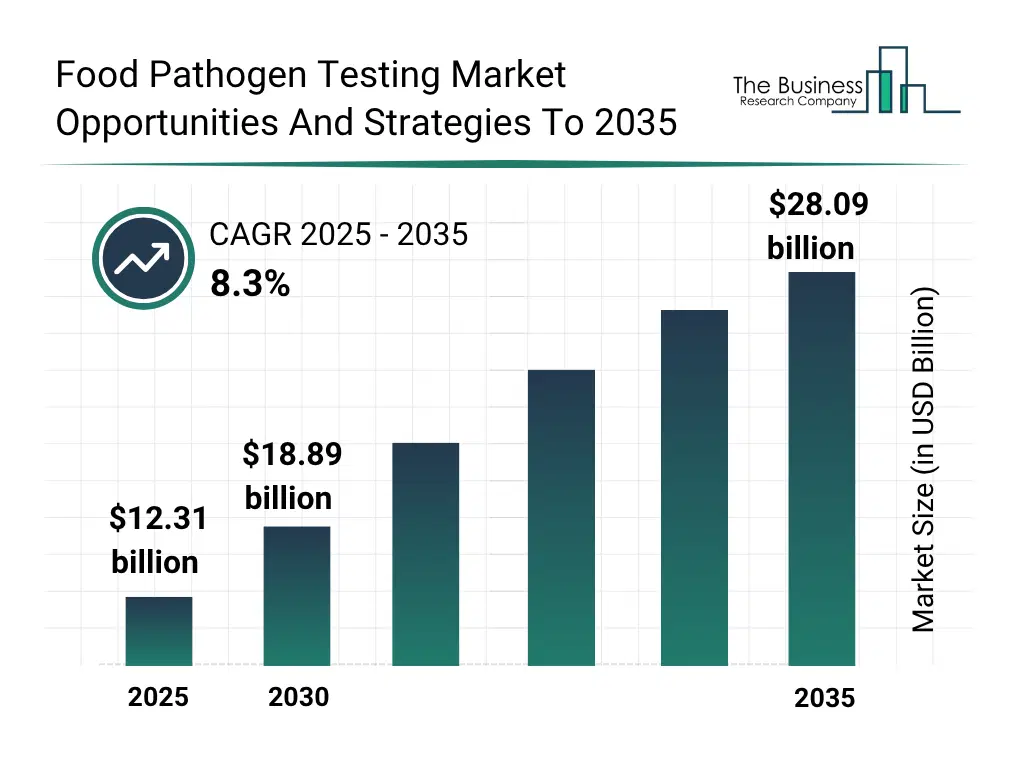
The global food pathogen testing market reached a value of nearly $12,311.3 million in 2025, having grown at a compound annual growth rate (CAGR) of 9.4% since 2020. The market is expected to grow from $12,311.3 million in 2025 to $18,894.3 million in 2030 at a rate of 8.9%. The market is then expected to grow at a CAGR of 8.3% from 2030 and reach $28,086.9 million in 2035. Growth in the historic period resulted from the growing awareness about food safety, growth of processed and ready-to-eat (RTE) foods, increasing demand from the food and beverage industry and rising demand for healthy tested and certified foods. Factors that negatively affected growth in the historic period were long testing turnaround time for conventional methods and shortage of trained food safety professionals. Going forward, the rising e-commerce and online food delivery, rising incidence of foodborne diseases, increasing demand for seafood and meat products and globalization of food trade will drive the growth. Factors that could hinder the growth of the food pathogen testing market in the future include high cost of testing and compliance, limited food safety infrastructure and impact of trade war and tariffs.Food Pathogen Market Segmentation
The food pathogen market is segmented by type, by technology, by application, by end-user and by geography.By Type –
The food pathogen market is segmented by type into:
- a) E.coli
- b) Salmonella
- c) Listeria
- d) Other Pathogens
By Technology –
The food pathogen market is segmented by technology into:
- a) Traditional
- b) Immunoassay
- c) PCR
- d) Other Technologies
By Application –
The food pathogen market is segmented by application into:
- a) Meat And Poultry
- b) Fruits And Vegetables
- c) Dairy
- d) Other Applications
By End-User –
The food pathogen market is segmented by end-user into:
- a) Food Manufacturers
- b) Food Retailers
- c) Quality Control Laboratories
- d) Government Agencies
By Geography - The food pathogen market is segmented by geography into:
- • China
- • India
- • Japan
- • Australia
- • Indonesia
- • South Korea
- • USA
- • Canada
- • Brazil
- • France
- • Germany
- • UK
- • Italy
- • Spain
- • Russia
-
o Asia Pacific
o Africa