

Flour Global Market Opportunities And Strategies To 2035
By Type (Wheat, Maize, Rice, Oats, Other Types), By Form (Wet, Dry), By Sales Channel (Direct, Indirect), By Application (Noodles and Pasta, Bread and Bakery Products, Animal Feed, Wafers, Crackers and Biscuits, Non-Food Application, Plastics, Biomaterials and Glue, Other Applications.), And By Region, Opportunities And Strategies – Global Forecast To 2035
Flour Market Definition
Flour is a finely ground powder produced by milling cereal grains, seeds, or roots, most commonly wheat, but also rice, corn, barley, rye, oats and cassava. It is a staple food ingredient rich in carbohydrates and may also contain proteins, fiber, vitamins and minerals, depending on the grain type and processing method. The flour market consists of sales, by entities (organizations, sole traders, or partnerships) that are widely utilized by households, commercial bakeries, foodservice providers, snack manufacturers and industrial processors. Flour is typically used in daily food preparation including the making of bread, pasta, cakes, pastries, crackers, biscuits and noodles, as well as in animal feed and certain non-food applications such as adhesives, bioplastics and other industrial uses.
Flour Market Size
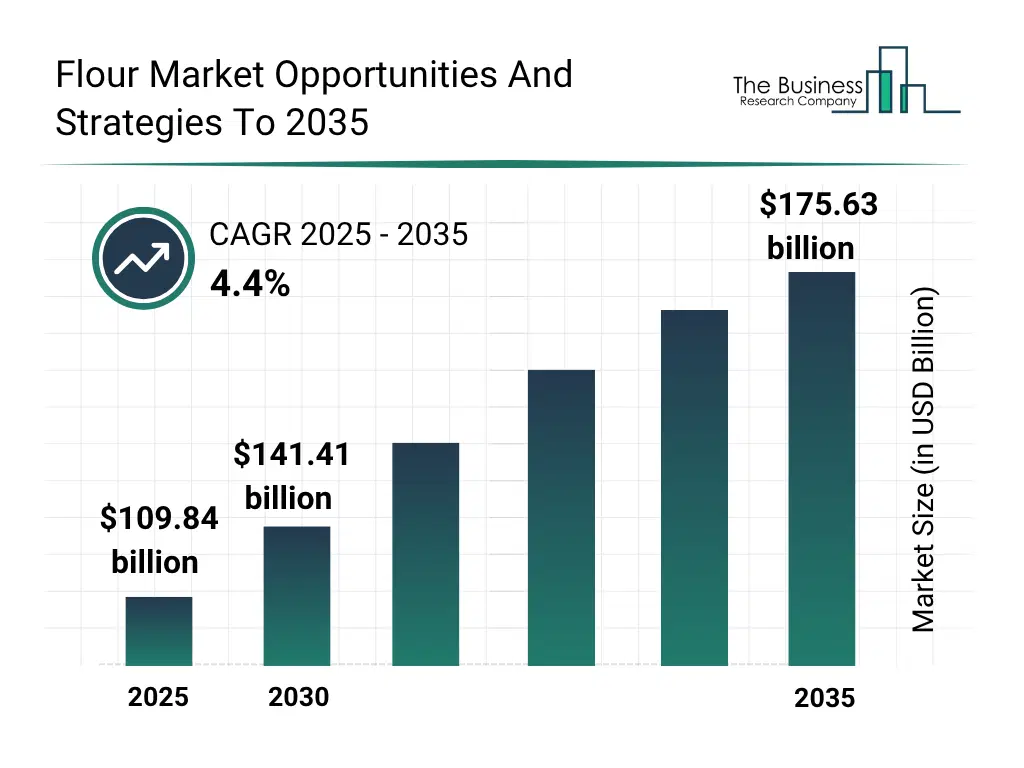
The global flour market reached a value of nearly $109,844.5 million in 2025, having grown at a compound annual growth rate (CAGR) of 6.3% since 2020. The market is expected to grow from $109,844.5 million in 2025 to $141,411.6 million in 2030 at a rate of 5.2%. The market is then expected to grow at a CAGR of 4.4% from 2030 and reach $175,625.9 million in 2035. Growth in the historic period resulted from changing dietary preferences, expansion of quick-service restaurants (QSRs) and fast-food chains, increase in consumption of ready-to-eat food and growing trade of wheat and grain-based food products. Factors that negatively affected growth in the historic period were rising costs of agricultural inputs and dependence on climatic conditions affecting grain yield. Going forward, growth in the bakery sector, growth of cloud kitchens and delivery-only brands, government initiatives supporting grain processing and rising health awareness for whole-grain and fortified flours will drive the growth. Factors that could hinder the growth of the flour market in the future include rising stringent regulatory standards on labelling, quality inconsistency due to variations in grain sourcing and trade war and tariffs.Flour Market Segmentation
The flour market is segmented by type, by form, by sales channel and by application.By Type –
The flour market is segmented by type into:
- a) Wheat
- b) Maize
- c) Rice
- d) Oats
- e) Other Types
By Form –
The flour market is segmented by form into:
- a) Wet
- b) Dry
By Sales Channel –
The flour market is segmented by sales channel into:
- a) Direct
- b) Indirect
By Application –
The flour market is segmented by application into:
- a) Noodles And Pasta
- b) Bread And Bakery Products
- c) Animal Feed
- d) Wafers
- e) Crackers And Biscuits
- f) Plastics
- g) Biomaterials And Glue
- h) Non-Food Applications
- i) Other Applications
By Geography - The flour market is segmented by geography into:
- • China
- • India
- • Japan
- • Australia
- • Indonesia
- • South Korea
- • USA
- • Canada
- • Brazil
- • France
- • Germany
- • UK
- • Italy
- • Spain
- • Russia
-
o Asia Pacific
o Africa